From your first prototype to mass production, manufacturing a board game involves far more than rules and art. Every component — the board game box, the board game card deck, the game storage tray, the game board itself, and every game token inside — must be designed, sourced, and assembled with precision. This guide walks you through the entire journey.
1. Start with a concept and component list
Before any manufacturing begins, you need a clear inventory of every physical element your game requires. Most designers underestimate this step. A complete board game is not just a rulebook — it is a system of interdependent parts. Your game board sets the playing field. Your board game card decks drive the mechanics. Your game token pieces represent players, resources, or progress. Your game storage tray keeps everything organized inside. And your board game box is the first thing a customer ever sees.
Write down every component, its quantity, its material, and its approximate size. This list becomes the foundation for your manufacturing brief and your cost estimate. Without it, suppliers cannot give you accurate quotes, and you cannot compare offers meaningfully.
2. Designing the game board
The game board is the centerpiece of almost every tabletop game. Whether it folds, tiles, or lays flat in a single sheet, the game board needs to balance visual clarity with structural durability. Most professionally manufactured game boards use a greyboard core (typically 1.5 mm to 3 mm thick) laminated with printed paper or linen-textured card on both sides. The surface can be matte, gloss, or soft-touch depending on your aesthetic and budget.
When designing your game board, work at a high resolution — 300 dpi minimum. Keep text away from fold lines. Use bleed margins so no white edges appear after cutting. Your manufacturer will provide a die-line template; always build artwork inside that template, not around it. A well-designed game board communicates the flow of play instantly and survives thousands of sessions without delaminating or warping.
3. Producing board game cards
No component is ordered more frequently in a typical game than the board game card. Card quality makes an enormous difference to player experience. A limp, thin board game card signals low quality; a crisp, well-coated card signals craftsmanship. Standard card stock for a board game card deck runs from 300 gsm to 350 gsm, with blue-core duplex stock preferred by many publishers because it resists light bleed and maintains rigidity.
Card finishes include gloss, matte, linen emboss, and UV spot. Linen emboss is particularly popular for a premium board game card feel. Card cutting can be standard (poker or tarot size) or custom-die-cut for unique shapes. If your game uses sleeved cards, confirm the dimensions match popular sleeve brands — players will notice if the fit is wrong. Ordering your board game card decks in bulk significantly reduces unit cost, so plan your print run carefully.
4. Manufacturing game tokens
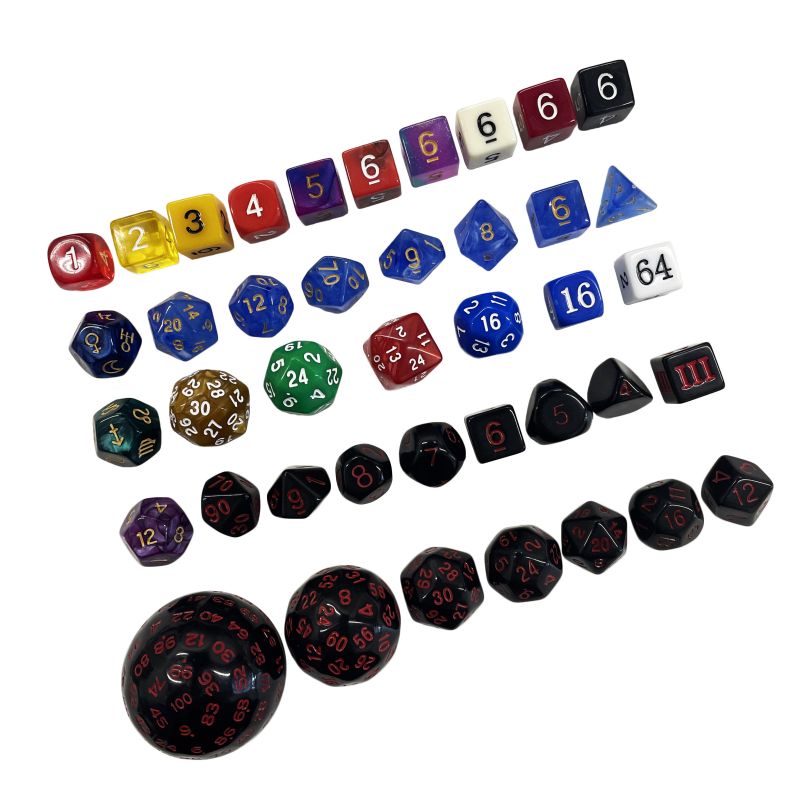
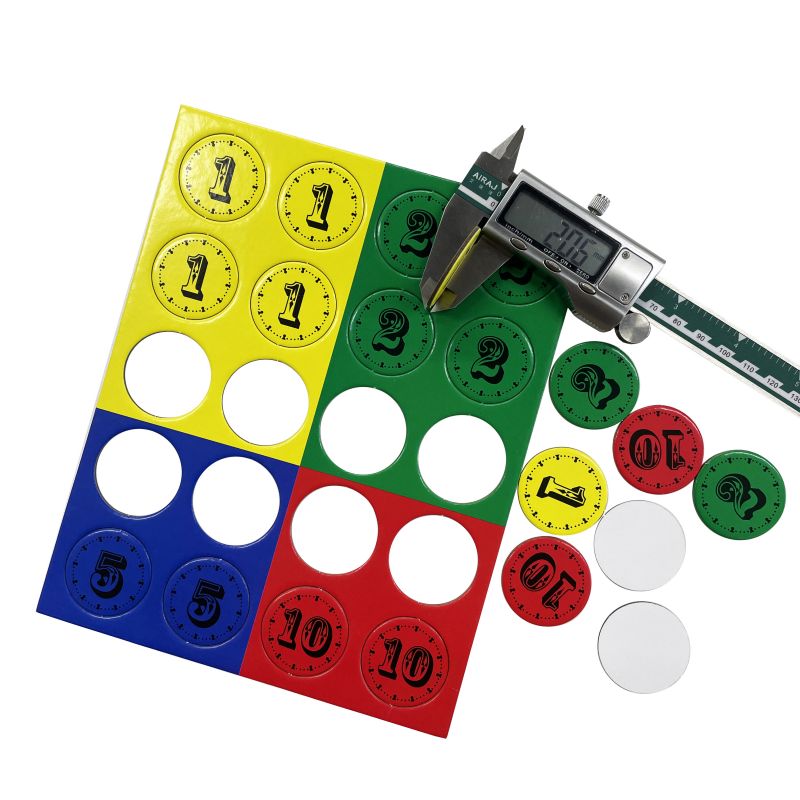
A game token is any physical piece that represents something on the board: a player meeple, a resource cube, a coin, a health tracker, a die-cut punchboard counter. The range of options for a game token is enormous. Materials include wood, plastic, resin, metal, and cardboard. Each brings a different weight, feel, and cost profile.
Wooden game token pieces are lightweight, eco-friendly, and easy to customize with laser engraving or screen printing. Plastic injection-molded tokens are durable and can achieve fine detail. Metal game token coins add weight and prestige to economic games. Custom-shaped resin tokens are increasingly popular for Kickstarter campaigns where tactile quality is a selling point. Whatever material you choose, order a sample run first — a game token that looks perfect in a 3D render may feel wrong at the table.
5. Designing the game storage tray
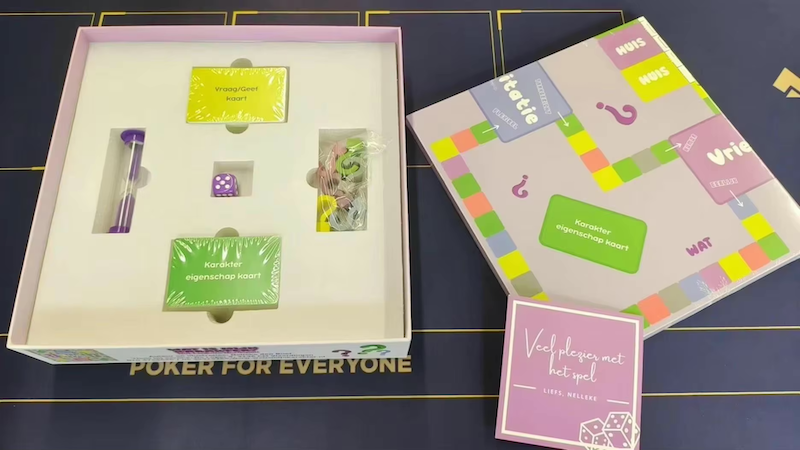
A game storage tray is the internal architecture of your box. It is also one of the most overlooked components in amateur game production — and one of the most appreciated by experienced players. A well-designed game storage tray holds every component securely during transport, allows for fast setup and teardown, and makes the whole game feel premium the moment someone opens the box.
Game storage trays are manufactured in thermoformed plastic, vacuum-formed PETG, or rigid cardboard. Thermoformed plastic gives a sleek, moulded appearance and is common in mid-to-high-budget games. Cardboard game storage trays are cheaper and more eco-friendly but require more precise design to prevent components from shifting. When designing your game storage tray, model every component in the tray before finalizing the mould — components always expand slightly in real life compared to digital mockups. A poorly fitted game storage tray that leaves gaps or crushes components will frustrate players at every game night.
6. Creating the board game box
The board game box is your game's retail identity. It is the first physical interaction a customer has with your product, and it sets every expectation before a single rule is read. A strong board game box design communicates genre, audience, and tone instantly. The structural quality of the board game box communicates production value before the box is even opened.
Board game boxes are most commonly made from a rigid greyboard shell with a printed, laminated wrap. The lid and base can be a lift-off two-piece construction or a tuck-box style depending on shelf depth requirements. Standard board game box sizes (like 11.5 × 11.5 inches or 10 × 10 inches) reduce manufacturing cost and fit standard retail shelves. Custom-size game boxes are possible but add cost. Consider the final packed weight of your board game box when planning logistics — shipping cost scales fast with weight and dimensions.
Board game box artwork should be designed with the spine visible on a shelf, where most retail decisions begin. Include a clear logo, a compelling illustration, player count, play time, and age range on the board game box exterior. On the back panel, use photography or renders of the components to show what is inside.
7. Sourcing a one-stop manufacturing partner
One of the most significant decisions a game publisher makes is whether to source each component separately or work with a single supplier capable of producing everything — the board game box, the board game card decks, the game storage tray, the game board, and every game token — under one roof. Separate sourcing means lower unit prices on individual components but higher coordination overhead, mismatched lead times, and complex quality control across multiple factories. A one-stop manufacturing partner absorbs that complexity and delivers a finished, assembled, retail-ready product.
When evaluating a one-stop supplier, ask for samples of every component type. Review their color management process — consistent color across the game board, board game card stock, and board game box wrap is essential for a professional result. Ask about their quality inspection process, their minimum order quantities, their lead times, and their experience with international shipping. A supplier who has produced thousands of complete games — not just printed cards — understands the nuances of how a game storage tray must nest within a board game box, and how game token tolerances affect tray fit.
8. Prototyping and sampling
Never skip the sample stage. Before committing to a full production run, request a physical sample of every component: the game board folded and flattened, a printed board game card deck sleeved and handled, each game token held in hand, the game storage tray loaded and shaken, and the complete board game box assembled. Play a full session with the prototype. Invite others to play and observe. Components that seemed adequate in isolation often reveal problems in actual play — a game token that is too small to pick up easily, a board game card that warps in humidity, a game storage tray that rattles during transport.
Document every change from the sample review and provide written revision instructions to your manufacturer. Confirm a revised sample before approving mass production. This process adds weeks to your timeline but eliminates the far more costly scenario of receiving a container of substandard product.
9. Quality control and final inspection
Establish clear acceptance criteria for every component before production begins. For your game board: no delamination, no warping beyond tolerance, colors within a defined Delta-E range from the approved proof. For your board game card deck: consistent cutting, no nicks or chips, even coating across the run. For your game token pieces: no flash or sink marks on plastic, no paint bleed on wooden tokens, correct count per unit. For your game storage tray: clean edges, no cracking, correct depth. For your board game box: tight corner joins, no bubbling on the laminate wrap.
Request a pre-shipment inspection report. Many publishers also commission an independent third-party inspection at the factory before shipment — especially for large runs or when working with a new supplier for the first time.
Manufacturing a board game is genuinely complex. Every element — the game board, the board game card decks, the game token components, the game storage tray, and the board game box — demands its own design discipline and manufacturing expertise. When these elements come together well, the result is a product that earns loyalty, generates word-of-mouth, and stands up to years of play.
Working with an experienced one-stop supply partner is the most reliable path to getting there. After 15 years of developing, testing, and refining every component in the board game supply chain — from the smallest game token to the finished board game box — we are ready to help you bring your game to life. Reach out to discuss your project, and let's build something worth playing.